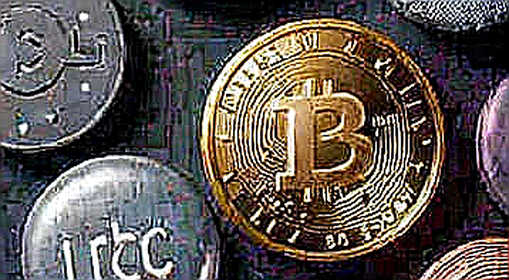
In a move that signals a major shift in the integration of digital assets into traditional finance, Germany’s cooperative and savings banks—pillars of the country’s retail banking system—are preparing to offer cryptocurrency trading services directly to their millions of customers. The development, expected to roll out over the coming months, eliminates the need for customers to use third-party exchanges like Coinbase or Binance for basic crypto purchases.
For decades, Sparkassen and Volksbanken have been the backbone of German banking, holding the accounts of roughly 70% of the population. Their decision to embed crypto trading into existing banking apps and online portals represents not just a new product line, but a structural evolution in how Europeans access digital assets. Instead of navigating the complexities of a dedicated exchange, a retail investor in Munich or Berlin will soon be able to buy Bitcoin or Ethereum with the same few clicks they use to transfer euros or check their balance.
The move comes at a time when the broader European regulatory framework, specifically the Markets in Crypto-Assets Regulation (MiCA), is providing clarity for traditional financial institutions. Under MiCA, banks can obtain licenses to custody and trade crypto assets, and the German Federal Financial Supervisory Authority (BaFin) has already issued numerous custody licenses. This regulatory certainty has given risk-averse institutions the green light to act.
However, the technical implementation is far from a simple switch. Banks are not building their own exchange engines from scratch. Instead, they are partnering with regulated infrastructure providers—likely firms like Coinbase Custody, Finoa, or Taurus—who handle the actual trade execution and cold storage of assets. The bank acts as the front-end interface and customer relationship manager, leveraging its trusted brand and existing KYC/AML processes. This means customer funds will not be held via self-custody wallets; the bank will control the private keys, a critical trade-off between convenience and the 'not your keys, not your coins' ethos.
From a market perspective, this is a long-term structural bullish signal for major cryptocurrencies like Bitcoin and Ethereum. By lowering the barrier to entry for risk-averse, mainstream savers, the banks create a new channel for steady, long-term capital inflows. Unlike the speculative day traders on Binance, these users are more likely to buy and hold, reducing circulating supply over time. The immediate price impact on BTC and ETH may be muted initially—the services will roll out gradually—but the cumulative effect over the next 12 to 24 months could be significant.
Competition for existing crypto exchanges is a more nuanced story. For the 'buy-and-hold' segment of retail users, banks offer superior trust and convenience. A customer who trusts their local Sparkasse more than a remote exchange will naturally choose the bank. This could erode the customer base of Coinbase and Kraken in Germany, though such exchanges retain advantages in trading features, asset variety, and liquidity for active traders. The real losers may be smaller, less compliant local crypto brokers who cannot match the banks’ regulatory stature.
Yet the risks should not be overlooked. The most immediate is the market’s tendency to overhype such news. Traders may already be pricing in a 'bank adoption' narrative that will take years to fully materialize. When the actual user adoption data arrives—showing perhaps only tens of thousands of customers in the first quarter, not millions—short-term disappointment could trigger a pullback. Additionally, if banks offer only buy orders without allowing withdrawals to external wallets, customers will be locked into custodial solutions, facing single points of failure. A security breach at a partner custody provider could cause massive reputational damage.
Another subtle risk lies in the user experience friction. German banks are not known for agile digital interfaces. Their standard banking apps, while secure, often lack the intuitive design of consumer fintech apps. If the crypto trading feature is buried under menus, requires additional paperwork, or imposes high fees, conversion rates will be low. Many customers may still prefer the speed and simplicity of a dedicated exchange.
From a regulatory perspective, this development is a massive validation of the MiCA framework. It shows that clear rules enable traditional finance to embrace crypto without compromising on AML or consumer protection. Other European countries—Switzerland, Austria, the Netherlands—are likely to see similar moves from their own cooperative banking networks. The narrative will shift from 'should banks enter crypto?' to 'which bank offers the best crypto service?'
In the longer term, this could reshape the entire European crypto ecosystem. If millions of new users enter through bank accounts, they will eventually seek higher yields in DeFi, demand hardware wallets for self-custody, and explore NFT and GameFi applications. That creates a downstream boom for wallet providers like Ledger, DeFi protocols on Ethereum and Polygon, and even decentralized identity solutions.
The German bank entry is not a single headline—it is the opening chapter of a structural convergence between retail banking and digital assets. The next few months will reveal whether the execution lives up to the promise. For now, the market has a new, powerful narrative: the quiet, slow, but unstoppable march of traditional finance into the crypto space.